
 Africa
  Caribbean
  Australasia & Pacific
  Thailand
  India
India  Cape Verde
  Kenya
Kenya Mounjaro (Tirzepatide): A Complete Guide for Hampshire Patients

Mounjaro is the brand name for tirzepatide, a weekly injection given under the skin. The MHRA authorised it for weight management in the UK in November 2023, and it is separately licensed for type 2 diabetes. This guide explains how it works, the BMI criteria it is licensed against, the dosing schedule, and the side effects — including the ones people are least often warned about.
We are Southdowns Pharmacy Group, an award-winning independent group with four pharmacies across Havant, Emsworth and Rowlands Castle. We run weight management consultations at all four, seeing people from Havant, Waterlooville, Bedhampton, Leigh Park, Portsmouth, Fareham, Petersfield and Chichester. Assessment comes first, and treatment follows only where it is clinically appropriate.
How tirzepatide works
Tirzepatide mimics two gut hormones your body already produces: GIP (glucose-dependent insulinotropic polypeptide) and GLP-1 (glucagon-like peptide-1). This dual action is what distinguishes it from earlier medicines in this class, which act on GLP-1 alone.
Those hormones do several things at once:
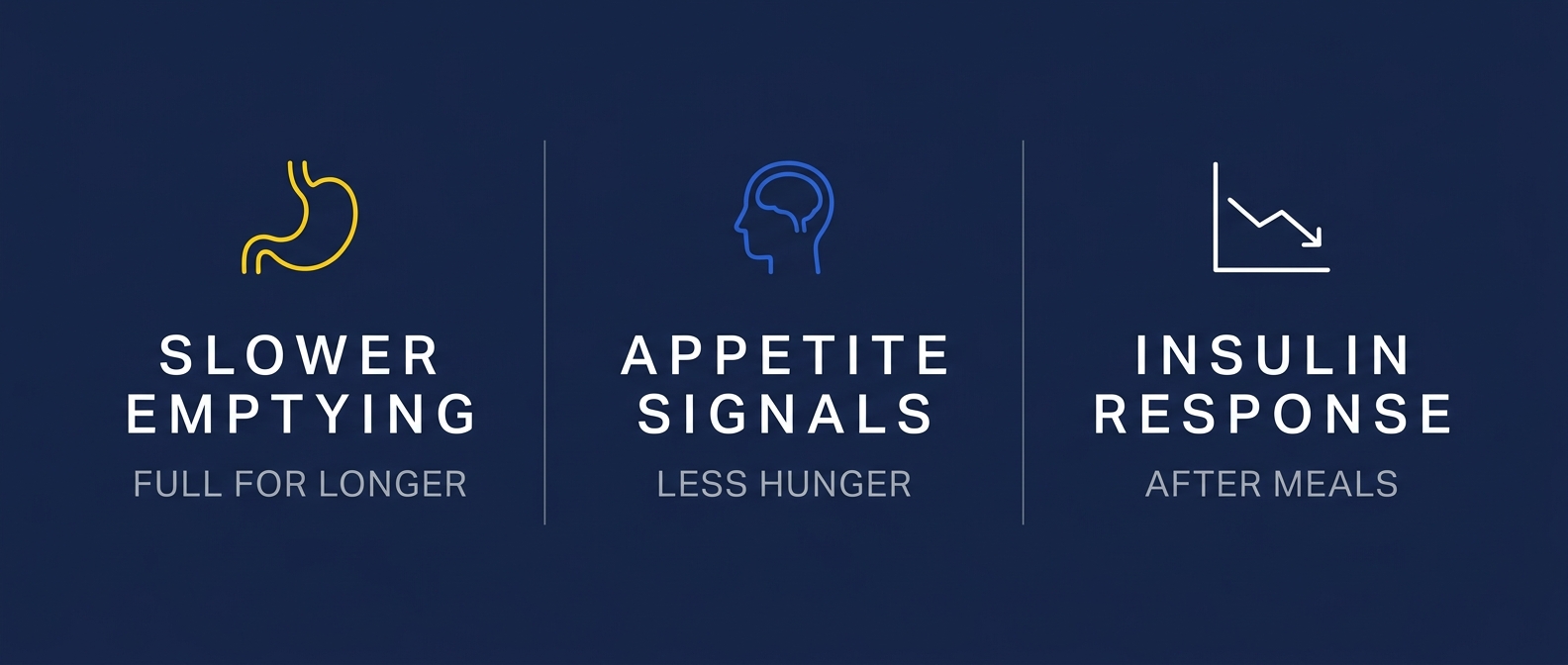
- Slow how quickly your stomach empties, so you feel full for longer after eating
- Act on appetite regulation in the brain, reducing hunger and the preoccupation with food that many people describe
- Improve the body’s insulin response after meals, which is why the same molecule is licensed for type 2 diabetes
It is worth being clear about what this means in practice. The medicine does not burn fat and it does not work independently of what you eat. It is licensed as an adjunct to a reduced-calorie diet and increased physical activity — it makes eating less considerably easier to sustain, but the diet and the activity remain part of the treatment, not optional extras.
Who it is licensed for
The UK licence for weight management is specific. Tirzepatide may be considered for adults with:
- A BMI of 30 or above, or
- A BMI of 27 to 30 together with at least one weight-related health condition — such as prediabetes, high blood pressure, raised cholesterol, obstructive sleep apnoea or cardiovascular disease
One important adjustment that often gets missed: lower BMI thresholds apply to some ethnic groups. For people of South Asian, Chinese, other Asian, Middle Eastern, Black African or African-Caribbean family background, the thresholds are usually reduced by 2.5 kg/m², because cardiometabolic risk rises at a lower BMI in these populations.
A number is never the whole picture, though. BMI does not distinguish muscle from fat, and a full assessment looks at your medical history, your medicines, your previous attempts at weight loss and what you are actually trying to achieve.
→ Am I eligible for Mounjaro? BMI and criteria explained
The dosing schedule
Treatment does not begin at an effective dose. It begins low and increases slowly, specifically to let the gut adjust and to limit nausea.
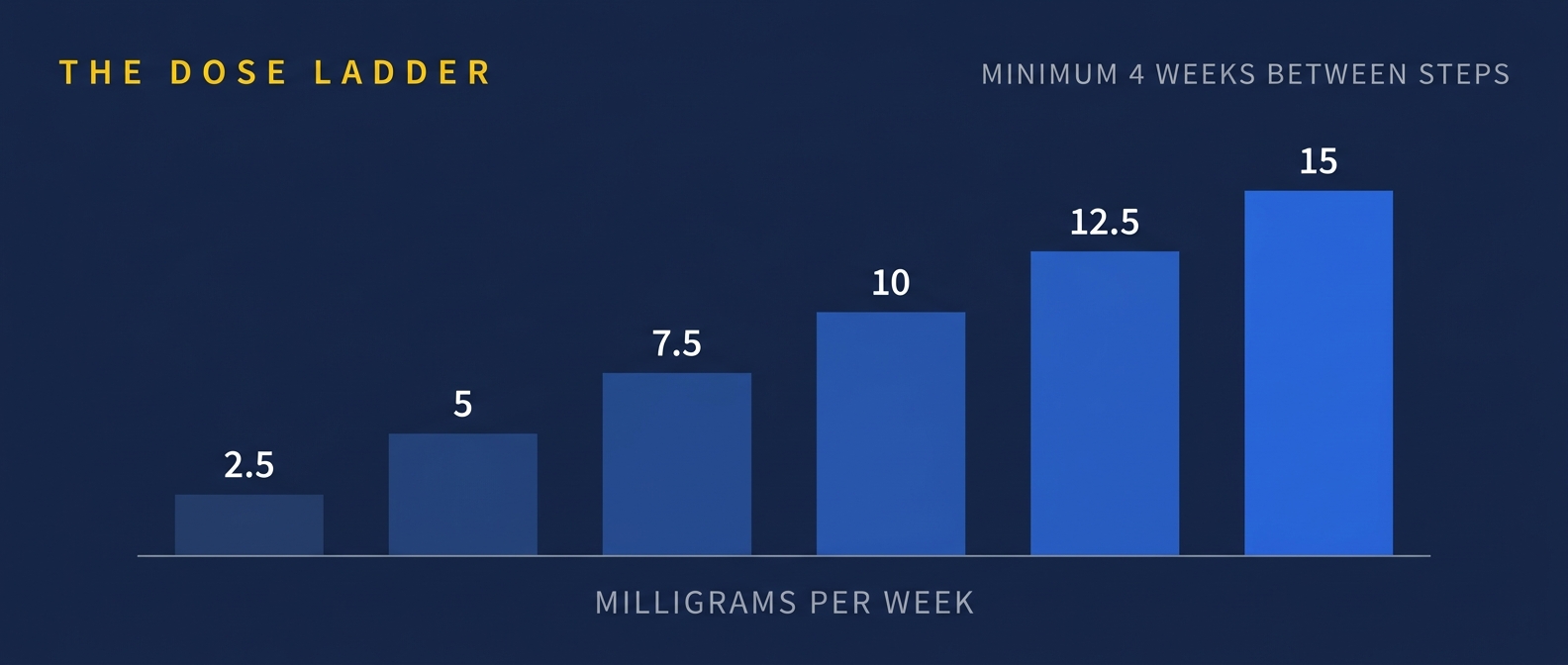
The injection is given once a week, on the same day each week, at any time of day, with or without food. It goes into the abdomen, thigh or upper arm, rotating the site each time.
→ Starting Mounjaro: what to expect in the first month
Side effects
Most side effects are gastrointestinal, most appear when starting or when the dose goes up, and most settle. The commonly reported ones include nausea, diarrhoea, vomiting, constipation, indigestion, abdominal pain, reduced appetite, fatigue and reactions at the injection site.
There are less common but more serious risks that anyone considering this medicine should know about before they start, not after:
- Pancreatitis — uncommon, but severe and persistent abdominal pain, often radiating to the back and frequently with vomiting, needs urgent medical assessment. Stop the medicine and seek help the same day.
- Gallbladder problems — gallstones and gallbladder inflammation are recognised, and rapid weight loss of any kind increases gallstone risk.
- Dehydration and kidney injury — usually a consequence of prolonged vomiting or diarrhoea rather than the drug directly, which is why keeping fluids up matters.
- Low blood sugar — the risk is much higher for anyone also taking insulin or a sulfonylurea, and those medicines may need adjusting by the prescriber who manages them.
→ Mounjaro side effects: what’s common and what needs urgent attention
The contraception interaction most people are not told about
This one deserves its own heading, because it is genuinely under-discussed and the consequences are significant.
Because tirzepatide slows stomach emptying, it can reduce how well the body absorbs oral contraceptives. The advice is to switch to a non-oral method of contraception, or to add a barrier method, for four weeks after starting treatment and for four weeks after every dose increase.
Tirzepatide is also not for use in pregnancy or while breastfeeding, and anyone planning a pregnancy should discuss stopping it well in advance.
→ Mounjaro and contraception: what women need to know
Who should not take it
Tirzepatide is not suitable for everyone, and a proper assessment exists to find that out. It is not used in pregnancy or breastfeeding, or by anyone who has had a hypersensitivity reaction to it.
Particular care and individual assessment apply to people with a history of pancreatitis, significant gastrointestinal disease including gastroparesis, diabetic retinopathy, or those taking insulin or sulfonylureas. Anyone with a history of an eating disorder should discuss this openly with the prescriber, as appetite-suppressing treatment may not be appropriate.
An honest consultation sometimes concludes that medication is not the right answer. That is a legitimate outcome, and a good one.
What happens at a consultation

Any treatment of this kind begins with an assessment, not a purchase. A consultation with one of our pharmacists covers:
- Measurements — height, weight, BMI and usually blood pressure.
- Medical history — existing conditions, previous surgery, family history, and any history of pancreatitis, gallbladder or thyroid problems.
- Your current medicines — everything, including contraception, insulin and anything bought over the counter.
- What you have already tried — and what has and has not worked.
- A clinical decision — whether treatment is appropriate, and if it is, what monitoring and follow-up looks like.
Where to be assessed in Hampshire
Weight management consultations are available at all four of our branches, with no GP referral needed. We see people from across Havant, Emsworth, Rowlands Castle, Waterlooville, Bedhampton, Leigh Park, Portsmouth, Fareham, Petersfield and Chichester.
More detail is on our weight management service page.
Read more
- Am I eligible for Mounjaro? BMI and criteria explained
- Mounjaro side effects: what’s common and what needs urgent attention
- Mounjaro and contraception: what women need to know
- Starting Mounjaro: what to expect in the first month
- Starting dose vs maintenance dose explained
Frequently asked questions
What is Mounjaro?
Mounjaro is the brand name for tirzepatide, a prescription-only weekly injection licensed in the UK for weight management in adults who meet the criteria, and separately for type 2 diabetes.
How does tirzepatide work?
It mimics two gut hormones, GIP and GLP-1, slowing stomach emptying and reducing appetite. It is licensed alongside a reduced-calorie diet and increased activity, not instead of them.
What BMI do you need?
A BMI of 30 or above, or 27 to 30 with at least one weight-related health condition. Lower thresholds apply to several ethnic groups.
What are the most common side effects?
Nausea, diarrhoea, vomiting, constipation, indigestion and reduced appetite — usually worst when starting or increasing the dose.
Does it affect the contraceptive pill?
It can. The advice is to use a non-oral method or add a barrier method for four weeks after starting and after each dose increase.
Can I take it in pregnancy?
No. It is not for use in pregnancy or while breastfeeding.
Do I need a GP referral?
No, but you do need a consultation and assessment, and treatment is only supplied where it is clinically appropriate.
Information on this page is general and reflects the UK licensed use of tirzepatide. It is not personalised medical advice and does not replace the patient information leaflet supplied with the medicine. Suitability is always an individual clinical decision made at consultation. If you experience severe abdominal pain, persistent vomiting or signs of an allergic reaction, seek urgent medical attention.

pharmodigital2026
Part of the GPhC-registered pharmacy team at Southdowns Pharmacy, providing evidence-based health guidance across our Hampshire branches.