
 Africa
  Caribbean
  Australasia & Pacific
  Thailand
  India
India  Cape Verde
  Kenya
Kenya How Do Weight Loss Injections Actually Work?

Diet and exercise are still the foundation of any weight management plan, but for many people, they’re not the whole story. Over the past few years, injectable medications have become part of the conversation too, and it’s worth understanding what they actually do before deciding whether they’re relevant to you.
This article is for general information only and does not constitute medical advice. Prescription weight loss injections are only available following a consultation and assessment by a qualified healthcare professional, who can advise on whether treatment is appropriate for you.
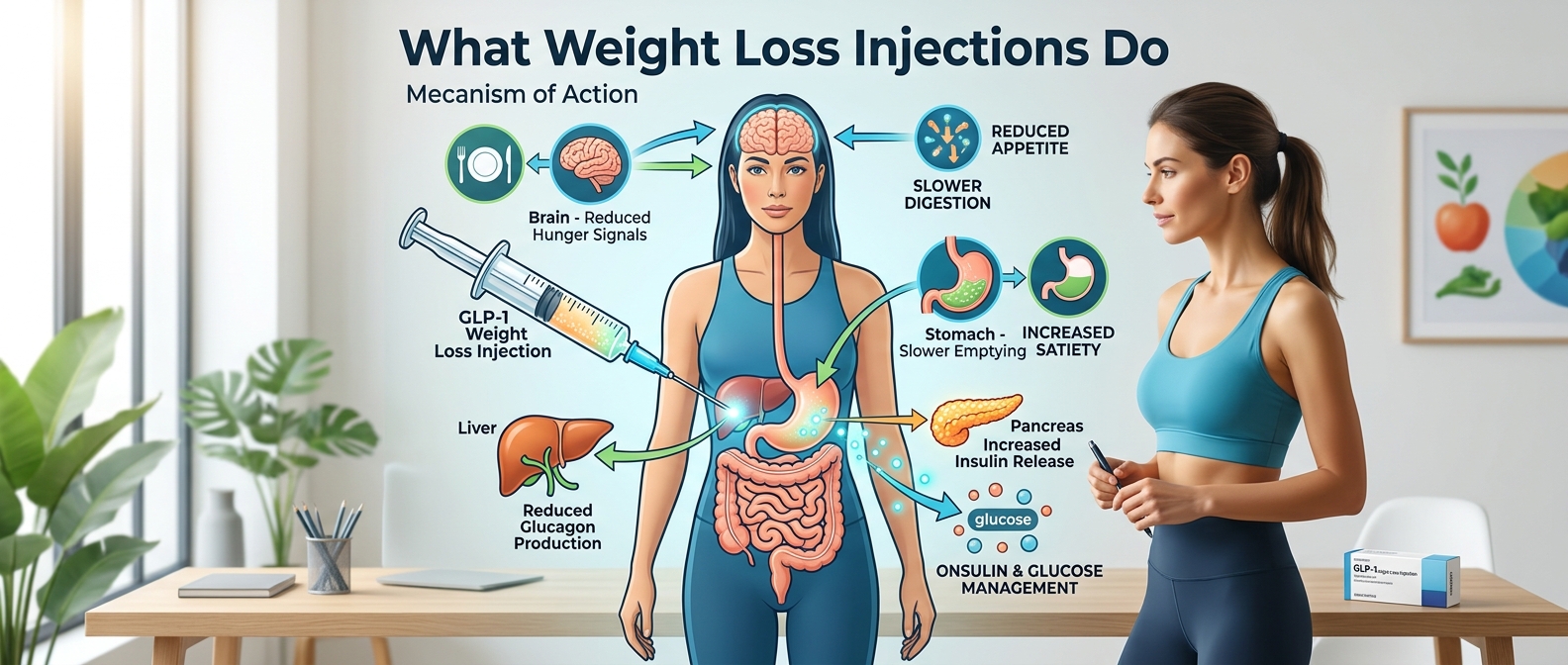
What Weight Loss Injections Do
These medications are given by injection and generally work by targeting the hormones involved in appetite, digestion, and how the body stores fat. Rather than acting as a stimulant or a fat-burner, most of them work by making you feel fuller for longer, so you naturally eat less without constantly fighting hunger.
The Hormones Behind It
Two hormone pathways come up most often in this space.
GLP-1
GLP-1 (glucagon-like peptide-1) is a hormone your gut releases naturally after eating. It slows digestion, tells your brain you’re full, and helps regulate blood sugar. Medications that mimic GLP-1 essentially turn up the volume on that signal, which is why people on them often report smaller appetites and less snacking between meals.
GIP
Some newer medications also target GIP (glucose-dependent insulinotropic polypeptide) alongside GLP-1. This dual approach affects gastric emptying and insulin sensitivity as well as appetite, which is part of why these medications are also being studied for their effect on blood sugar control in people with type 2 diabetes.
Hormones aren’t the whole picture. How well any weight management plan works also depends on sleep, stress, activity levels, and consistency over time. A qualified prescriber can help you build a personalised plan that takes all of these factors into account, not just the medication.
Who Tends to Be Considered for This Type of Medication
Clinical guidance generally points to adults with a BMI of 30 or higher, or a BMI of 27 or higher alongside a weight-related health condition such as high blood pressure or high cholesterol. That said, eligibility isn’t just about BMI. A prescriber will look at your full medical history, any existing conditions, and other medications you’re taking before deciding whether this route makes sense for you.
What to Weigh Up Before Considering This Route
Your existing health conditions
Diabetes, high blood pressure, and cholesterol can all factor into which options, if any, are appropriate.
Realistic expectations
Results vary a lot from person to person, and outcomes depend on more than the medication alone, including diet, activity levels, and consistency.
Side effects
Nausea and digestive discomfort are the most commonly reported issues, though more serious risks are possible and should be discussed with a prescriber ahead of time.
Long-term sustainability
These medications are generally intended to support a broader weight management plan, not replace one. What happens after treatment ends is just as important a question as what happens during it.

Where This Leaves You
Injectable weight loss medications work by influencing hormones that control appetite and digestion, and for some people, they’ve made a real difference. But they’re prescription-only for good reason. Whether one is appropriate for you depends on your individual health picture, not on which option sounds most effective in a comparison article. If you’re considering this path, the right next step is a proper conversation with a qualified healthcare professional who can look at your full history and talk you through what’s realistic.
Ready to talk it through with someone qualified?
Whether you’re just starting your weight loss journey or looking for additional support, our experienced pharmacy team is here to answer your questions, discuss your options, and help you choose the approach that’s right for you.
Book a Consultation
Southdown Pharmacy Group
Part of the GPhC-registered pharmacy team at Southdowns Pharmacy, providing evidence-based health guidance across our Hampshire branches.