
 Africa
  Caribbean
  Australasia & Pacific
  Thailand
  India
India  Cape Verde
  Kenya
Kenya Why Am I Always Tired? The Causes Worth Checking

Being tired all the time is one of the most common reasons people visit a pharmacy, and one of the most frustrating things to live with. You sleep, and you still wake up exhausted. You push through, blame work or age, and carry on. But persistent, unexplained tiredness is often your body flagging something specific — and much of it is straightforward to check.
This guide walks through the most common medical causes of fatigue, what each one feels like, and which tests actually answer the question. If you would rather go straight to testing, see our private blood tests in Hampshire, with results in 24 to 48 hours and a pharmacist to explain them.
When is tiredness worth investigating?
Everyone gets tired. What warrants a closer look is fatigue that:
- has lasted more than a few weeks and is not explained by poor sleep or a stressful period;
- does not improve after a proper rest or a holiday;
- comes with other symptoms — breathlessness, palpitations, tingling in your hands or feet, hair thinning, unexplained weight change, feeling unusually cold, or brain fog;
- is affecting your work, driving, or day-to-day functioning.
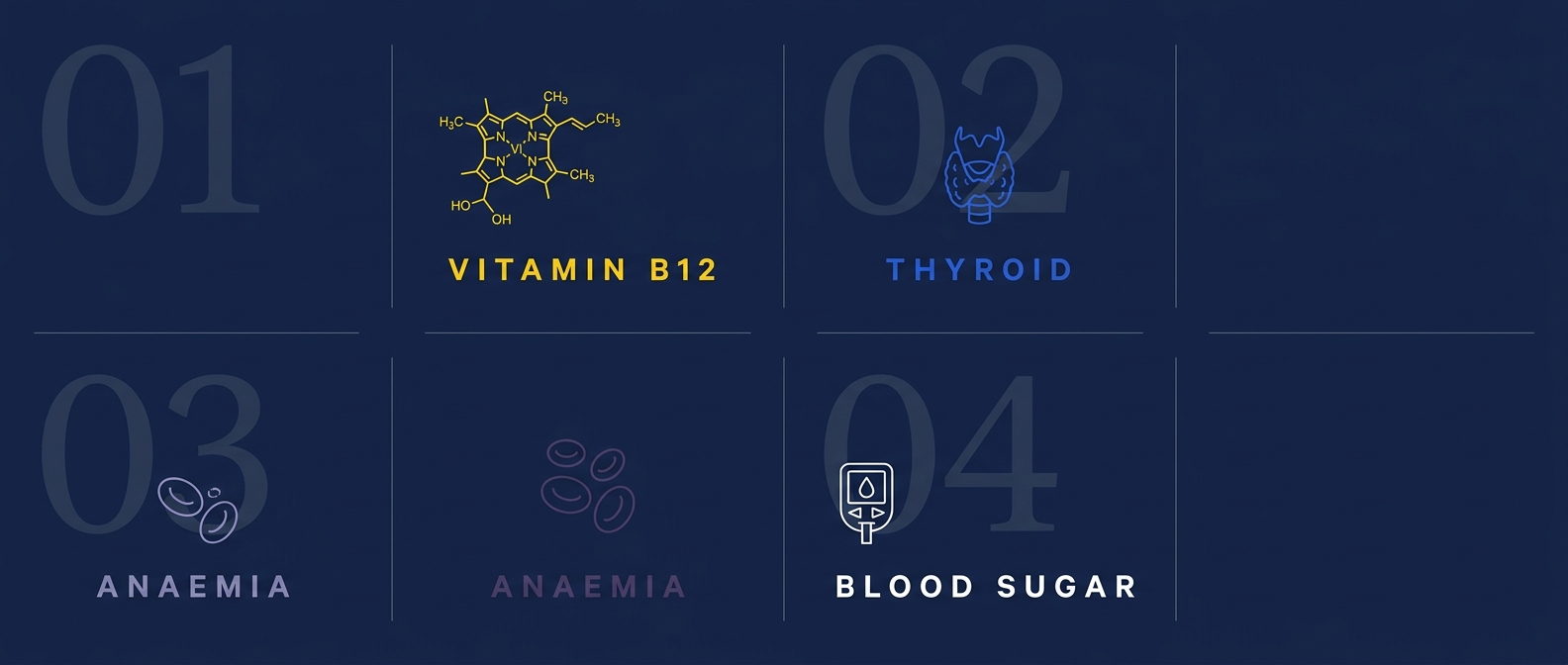
The four most common causes we see
1. Low vitamin B12
B12 is essential for making red blood cells and for nerve function, and deficiency is more common than most people realise — particularly if you are over 50, eat little or no meat and dairy, or take certain long-term medicines. Alongside tiredness it often causes tingling or numbness in the hands and feet, brain fog, mouth ulcers or a sore tongue, and low mood.
It is also frequently missed, because early on your standard blood results can look normal. → Read about the symptoms of B12 deficiency, or see the four stages of B12 deficiency for why it can hide on a test.
2. An underactive thyroid
Your thyroid sets your metabolic pace, so when it slows the whole system slows with it: fatigue, weight gain, feeling cold when others are comfortable, dry skin, hair thinning and low mood. It is common, very treatable, and diagnosed with a simple blood test.
→ What TSH and thyroid results mean · Book a thyroid test (£79)
3. Anaemia and iron deficiency
If your blood cannot carry oxygen efficiently, everything feels harder. Anaemia typically brings tiredness with breathlessness on stairs, pale skin, palpitations and sometimes headaches. Heavy periods are a very common cause in women, and it is often picked up on a full blood count.
→ What a full blood count shows · Book a full blood count (£79)
4. Raised blood sugar
Persistent tiredness, increased thirst and needing to urinate more often — particularly at night — can point to raised blood sugar or type 2 diabetes. It often develops quietly over years, and the earlier you know, the more can be done about it.
→ What diabetes blood test results mean · Book diabetes screening (£55)
Going deeper on B12
B12 is the cause we see most often overlooked, so we have covered it in full in our complete guide to vitamin B12 deficiency, plus these detailed guides:
- B12 deficiency symptoms in women — and why they get mistaken for perimenopause or thyroid problems
- The 4 stages of B12 deficiency — why a standard test can look normal
- What causes B12 deficiency — including the long-term medicines linked to it
- B12 injections vs tablets — which you actually need
Other causes worth ruling in or out
- Sleep apnoea — loud snoring, waking unrefreshed, daytime sleepiness. Needs GP referral, not a blood test.
- Perimenopause — fatigue, disrupted sleep, mood and cycle changes, often mistaken for something else.
- Depression and anxiety — fatigue is a core physical symptom, not just a mental one.
- Long-term medicines — some blood pressure medicines, antihistamines and others cause tiredness.
- Coeliac disease and other absorption problems — often alongside bloating or bowel changes.
- Post-viral fatigue — common after infection, and usually improves with time.
Which tests actually answer the question?
Fatigue rarely has one obvious cause, which is why checking more than one marker in a single appointment is usually the sensible approach. The three most useful starting points are a full blood count, thyroid function, and blood sugar — with B12 considered alongside them.

Blood testing is carried out at our Davies Pharmacy phlebotomy centre in Havant, with no GP referral needed and results typically back within 24 to 48 hours. If you would like to check more than one of these, mention it when you book and our pharmacist will advise what is appropriate for you.
What happens once you know the cause
This is the part that matters. Identifying the cause is not an end in itself — it is what lets you actually do something. What that looks like depends on what we find.
- Low B12 — treatable, and often quickly. Depending on the cause, that means dietary change, oral supplementation, or B12 injections, which we provide at our Bosmere, Davies and Emsworth branches. Many people notice their energy lifting within a couple of weeks.
- Underactive thyroid — very treatable with daily medication through your GP, and most people feel substantially different once levels are corrected.
- Anaemia — depends on the cause, but iron deficiency in particular usually responds well once addressed, and we can advise on supplementation and whether your GP should investigate further.
- Raised blood sugar — if you are in the pre-diabetes range, this is genuinely the best time to find out, because progression can often be slowed or prevented.
- Everything normal — that is a useful result too. It rules out the common medical causes and points you towards sleep, stress, mood or lifestyle factors, with a baseline on record for the future.
How quickly could you feel different?
Being honest about timescales matters, because expectations shape whether people stick with treatment.
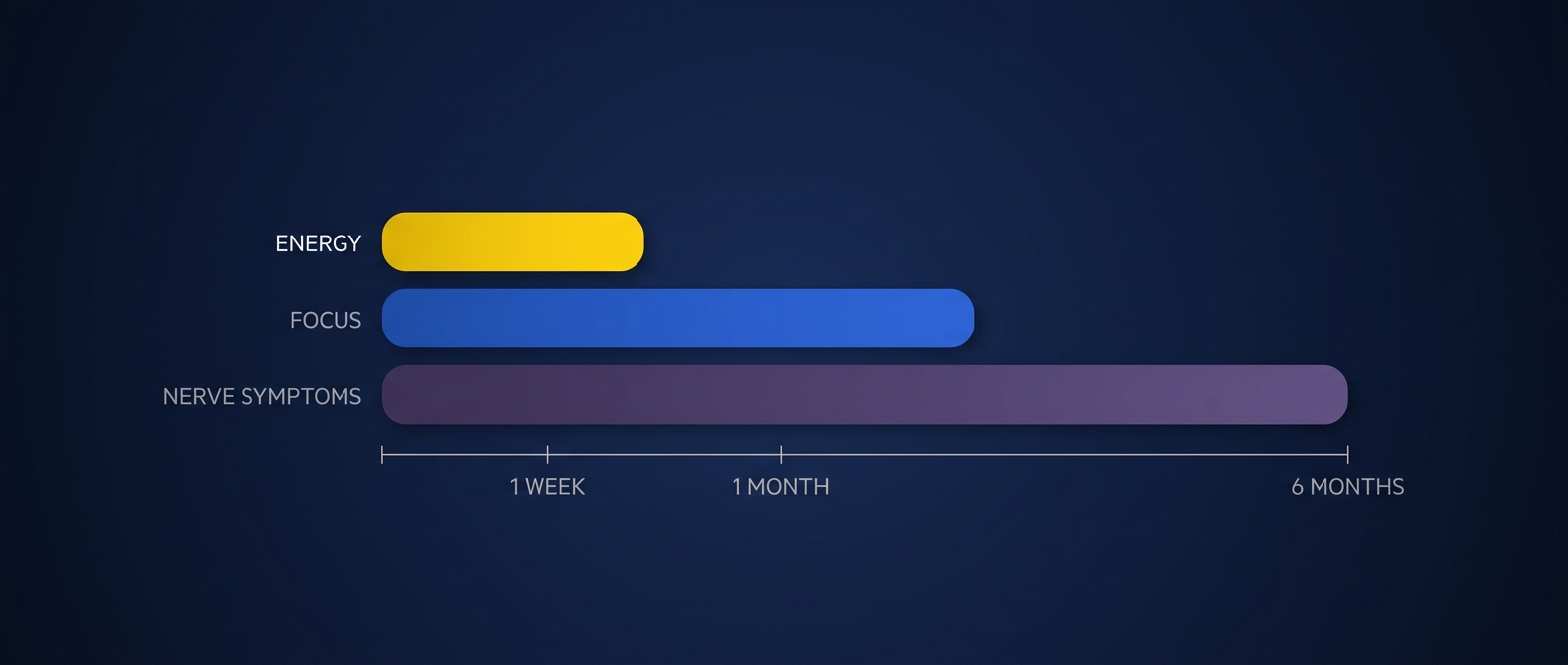
- Days to two weeks — energy often begins to lift first, particularly with B12 or iron correction.
- Two to eight weeks — brain fog, mood and concentration typically improve more gradually.
- Several months — nerve-related symptoms such as tingling or numbness are the slowest to settle, and improvement can continue over a long period.
One honest caveat: correcting a deficiency helps if you actually have one. B12 will not boost the energy of someone whose B12 is already healthy — which is exactly why testing first is worth the money rather than guessing.

Frequently asked questions
How long should I be tired before getting tested?
If fatigue has persisted for more than two to four weeks without an obvious explanation, it is reasonable to check the common causes.
Which single test is most useful for tiredness?
There isn’t one. A full blood count is the broadest starting point, but thyroid function and blood sugar are common culprits too, which is why they are often checked together.
Can I be tired from low B12 even if my blood test was normal?
Possibly. Standard serum B12 can appear normal in the earlier stages of depletion, which is one reason deficiency gets missed. Your symptoms matter alongside the number.
Do I need a GP referral?
No. Our blood tests are private services you can book directly.
Will someone explain my results?
Yes — a pharmacist consultation is included with every test.
This guide is general information and not a diagnosis or a substitute for advice from your GP. If your tiredness is severe, worsening, or accompanied by the warning signs listed above, please contact your GP or NHS 111.

pharmodigital2026
Part of the GPhC-registered pharmacy team at Southdowns Pharmacy, providing evidence-based health guidance across our Hampshire branches.