
 Africa
  Caribbean
  Australasia & Pacific
  Thailand
  India
India  Cape Verde
  Kenya
Kenya Do I Need a Vitamin B12 Injection? Signs of Deficiency to Watch For

Feeling constantly drained despite a full night’s sleep, or struggling to think clearly through the day? These are easy symptoms to dismiss as ordinary tiredness, but they are also among the most common signs of a vitamin B12 deficiency.
Vitamin B12 is essential for normal red blood cell formation, neurological function and DNA synthesis. If levels remain low, deficiency can cause fatigue, cognitive difficulties and, in more serious or prolonged cases, nerve damage. For people who have difficulty absorbing B12 from food or oral supplements, B12 injections may be recommended by a healthcare professional as part of appropriate treatment.
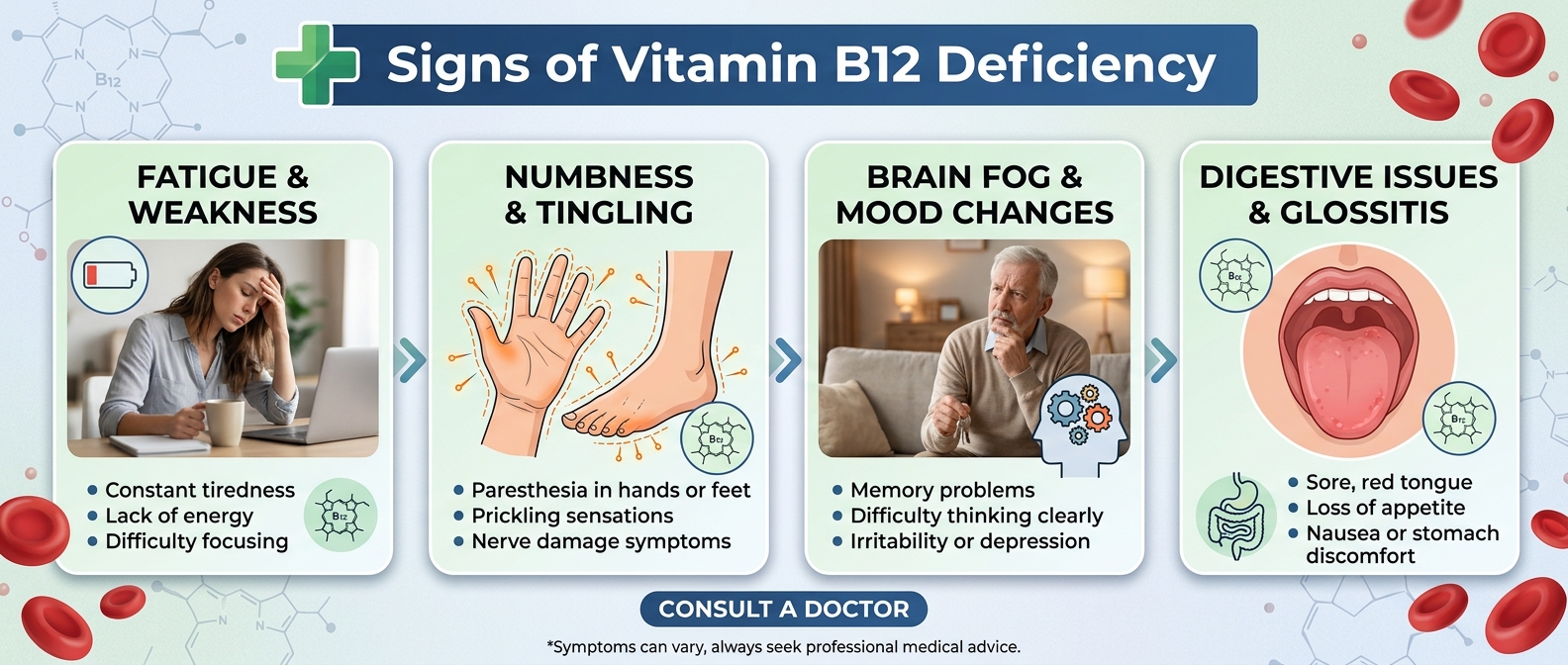
Signs of Vitamin B12 Deficiency
B12 deficiency symptoms tend to build slowly, which is exactly why they are so easy to overlook at first. A few signs are worth paying attention to.
Persistent Fatigue and Weakness
Red blood cells carry oxygen, and B12 is one of the raw materials the body needs to make them. Not enough B12 means less oxygen getting where it needs to go, and tiredness that no amount of sleep seems to fix.
Brain Fog and Poor Concentration
Fatigue rarely travels alone. Brain fog tends to show up around the same time, since B12 has a direct hand in how the brain functions. Some people describe it as forgetting things mid-sentence. Others just feel like they are thinking through fog, which is where the term comes from.
Mood Changes
Mood is the least talked-about symptom, but it is a real one. Mood shifts trace back to B12’s role in producing serotonin and dopamine, the chemicals behind a stable mood. When levels drop, irritability and low mood can follow, sometimes without an obvious cause.
Tingling or Numbness in the Hands and Feet
Nerves need B12 to stay healthy, and going without it for too long can damage them. That shows up as tingling, numbness, or a pins-and-needles feeling, usually in the fingers or feet first. It is one of the signs doctors take more seriously, since nerve damage can take longer to reverse than other symptoms.
Pale or Jaundiced Skin
This symptom can be surprising. Low B12 can cause a type of anemia where red blood cells break down faster than the body can replace them. As they break down, they release a substance called bilirubin, and enough of it can give the skin a pale or slightly yellow tint.
Shortness of Breath and Lightheadedness
Less oxygen in the blood has to show up somewhere, and for many people it is the lungs. Stairs feel harder than they used to. A short walk leaves you more out of breath than it should. Some people also get lightheaded, particularly if they push through exercise instead of slowing down.
Glossitis, or an Inflamed Tongue
A tongue that looks swollen, unusually red, or feels sore can be an early physical sign of deficiency. Some people also notice mouth ulcers, a burning sensation, or mild difficulty swallowing alongside it.
Vitamin B12 deficiency can develop gradually, so symptoms may not appear all at once. If you have several symptoms, particularly persistent fatigue, tingling or numbness, or problems with concentration, it is worth discussing your symptoms with a healthcare professional.
Who Is Most at Risk
Some groups are considerably more likely to develop a B12 deficiency, generally because of diet, age, or an underlying condition that affects absorption.
- Vegetarians and vegans face a higher risk simply because B12 occurs naturally in animal products such as meat, fish, eggs, and dairy. Fortified plant-based foods help, but often do not provide enough on their own.
- Older adults, particularly those over 50, produce less stomach acid over time, and stomach acid is needed to absorb B12 from food. Conditions such as atrophic gastritis, more common with age, further reduce absorption.
- People with digestive conditions like Crohn’s disease, coeliac disease, or irritable bowel syndrome often struggle to absorb B12 properly, as do those who have had gastric bypass or other weight loss surgery.
- Certain medications interfere with absorption as well, including proton pump inhibitors, metformin, and long-term antacid use. Anyone taking these regularly may want to keep an eye on their B12 levels over time.
- Pernicious anemia is a separate case worth mentioning on its own. It is an autoimmune condition that affects the stomach’s ability to absorb B12 and often requires lifelong injections rather than dietary correction.

Why Injections Are Sometimes Recommended
Tablets have to survive the gut before B12 ever reaches the bloodstream, and for people with absorption problems, that is exactly where things go wrong. For people who have trouble absorbing B12 whether due to a digestive condition, age-related changes, or pernicious anaemia oral supplements may not be enough on their own, since they still rely on gut absorption. Injections bypass that step, which is why a GP or prescriber may recommend them specifically for absorption-related deficiencies, rather than as a general first option for everyone with low B12.
Need Advice About B12 Injections?
Speak with our pharmacy team to discuss whether B12 injections may be appropriate for you.
Speak to Our TeamCommon Questions About B12 Deficiency
How quickly do B12 injections start working?
Some people notice a difference in energy within a few days, though it can take a few weeks for full benefits to show. The timeline depends on how severe the deficiency was to begin with.
Can B12 deficiency be reversed?
Yes, in most cases levels return to normal with the right treatment, whether that is dietary change, supplements, or injections. Nerve-related symptoms can take longer to improve if the deficiency went on for a while before treatment started.
How often should B12 levels be checked?
This depends on individual risk factors, but anyone in a higher-risk group is often advised to have levels checked periodically rather than just once. A GP can recommend a suitable interval based on the underlying cause.
Can you take too much B12?
B12 is water-soluble, so the body generally excretes what it does not need. Very high doses are not typically dangerous, though it is still worth discussing supplementation with a healthcare provider rather than self-dosing indefinitely.
When to Get B12 Levels Checked
Ongoing fatigue, brain fog, tingling in the hands or feet, or low mood with no clear cause are all worth checking. The issue matters even more if you are vegetarian, vegan, older, or have a digestive condition that affects absorption.
A simple blood test can settle the question. From there, it depends on what caused the drop. Sometimes a change in diet is enough. Other times, a GP will suggest supplements or injections instead.

Southdown Pharmacy Group
Part of the GPhC-registered pharmacy team at Southdowns Pharmacy, providing evidence-based health guidance across our Hampshire branches.